The Truth About Storing a Battery on Concrete

Battery on Concrete

For decades, you may have heard the advice that you should never store a battery directly on concrete. Instead, people would tell you to put it on a block of wood, a piece of cardboard, or even a rubber mat to prevent it from “discharging” or “going flat”.

But is this really true, or is it just another long-lived myth in the automotive and marine battery world? Let’s dig into the history, the science, and the modern reality to finally settle the debate on storing a battery on concrete.

Origins of the “Battery on Concrete” Myth

The idea that concrete is bad for batteries didn’t come out of thin air. In fact, it used to be true—about 100 years ago.

In the early 20th century, batteries were built very differently from the sealed, high-quality designs we have today. Back then:

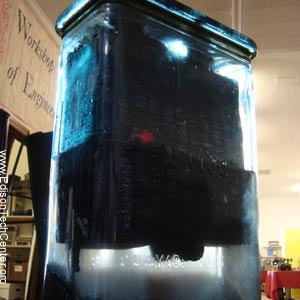
  • Battery casings were made of wood and the cells inside were made of glass.
  • If the battery sat on a damp concrete floor, the wooden casing could absorb moisture.
  • The swelling of the wood could cause the glass cells to crack or break.

This damage would make the battery fail prematurely, and so mechanics and owners quickly learned to avoid placing batteries directly on concrete.

Later, another design problem emerged:

  • Some batteries weren’t fully encased at all, allowing electricity to leak into the ground via the concrete.
  • Porous hard rubber cases, which contained carbon, could conduct a small amount of electricity in the presence of moisture—again causing premature discharge.

In both cases, concrete was seen as the culprit—and so the “never store your battery on concrete” advice became common wisdom.

Why the Myth Doesn’t Apply Today

Fast forward to the present, and battery technology has completely changed.

Modern automotive, marine, and deep cycle batteries are made with durable, non-conductive plastic or hard rubber casings that are:

  • Moisture resistant
  • Non-porous
  • Electrically insulated from their environment

That means there’s no pathway for electrical discharge from the battery into the concrete. If your battery loses charge while sitting on the garage floor, it’s not because it’s touching concrete—it’s because all batteries self-discharge slowly over time, no matter where you put them.

The Real Factors That Affect Battery Life

If concrete isn’t the problem, what causes a battery to lose charge or fail sooner than expected? The main culprits are:

1. Temperature

Heat is one of the biggest enemies of battery life.

  • In hot climates, a battery may last only two-thirds as long as it would in a cooler climate.
  • For example, a battery that lasts 4 years in a cool region might only last 2 years and 8 months in a hotter one.

Interestingly, concrete can actually act as a heat sink, helping to keep your battery cooler than if it were sitting on a wooden bench or metal shelf in a hot shed.

2. Self-Discharge

All lead-acid batteries naturally lose some charge over time when not in use. This is caused by chemical reactions inside the battery, not by the surface it’s sitting on.

  • The rate of self-discharge is higher in warmer temperatures.
  • Regular top-up charging can help maintain battery health.

3. Poor Charging Practices

Both overcharging and undercharging can damage a battery.

  • Undercharging can lead to sulphation—a build-up of lead sulphate crystals that reduces capacity.
  • Overcharging can cause excessive heat and water loss in flooded batteries.

4. Neglect and Physical Damage

Corrosion on terminals, cracks in the casing, or damage from dropping or knocking the battery can all shorten its lifespan.

So, Can You Store a Battery on Concrete?

Yes—you absolutely can.

Today’s battery casings completely prevent the kind of electrical leakage and moisture absorption problems that gave rise to the myth. In fact, storing your battery on a cool concrete floor might even help prolong its life, particularly in hot environments.

Best Practices for Storing a Battery

Even though the concrete myth is busted, proper storage still matters. Here are some tips to keep your battery in good condition:

1. Keep It Cool (But Not Freezing)

Cool temperatures slow the chemical reactions inside the battery, reducing self-discharge. Avoid direct sunlight or hot enclosed spaces.

2. Check Voltage Regularly

A battery left sitting for months without use can drop to a low charge state.

  • Use a multimeter to check voltage every 4–6 weeks.
  • Recharge it if voltage drops below the recommended level for your battery type.

3. Avoid Extreme Discharge

For most lead-acid batteries, try not to let them drop below 50% state of charge unless they are designed for deep cycling.

4. Clean Terminals

Keep the terminals free of corrosion by cleaning with a battery terminal brush and applying a corrosion inhibitor.

5. Use a Battery Maintainer

For long-term storage (e.g., seasonal vehicles, boats, caravans), connect a smart charger or maintainer that keeps the battery at an ideal float charge.

old car battery

Common Battery Myths

The “battery on concrete” belief isn’t the only myth out there. Over the years, many misconceptions have circulated about different types of batteries and how they should be used. Here are some of the most common myths — and the facts you need to know.

1. Cranking Batteries and Deep Cycle Batteries are Interchangeable

While both cranking (starting) batteries and deep cycle batteries store and release energy, they are designed for different purposes. Cranking batteries are optimised to deliver short bursts of high current needed to start an engine, while deep cycle batteries are designed to provide a steady amount of power over a longer period. Using a cranking battery in a deep cycle application or vice versa can lead to poor performance and reduced battery life

2. Deep Cycle Batteries Can’t Start Engines

While deep cycle batteries are not designed for the rapid, high-current discharge needed to start engines, some modern deep cycle batteries are engineered with dual-purpose capabilities. These batteries are designed to provide a reasonable amount of cranking power while still offering the benefits of deep cycling. However, they may not perform as well as dedicated cranking batteries in starting applications.

3. Deep Discharges Are Fine for Cranking Batteries

Cranking batteries are not built to withstand deep discharges (discharging to a low state of charge), which can lead to a significant reduction in their lifespan and capacity. It’s best to keep cranking batteries charged above 50% whenever possible to ensure their longevity and optimal performance in starting applications.

4. Deep Cycle Batteries Don’t Need Maintenance

While deep cycle batteries are more resilient to deep discharges than cranking batteries, they still require proper maintenance. Regular charging, avoiding deep discharges, and periodic equalization (if applicable) are essential to extend the life of deep cycle batteries. Neglecting maintenance can lead to sulfation and reduced battery capacity.

5. Adding Water to Sealed Deep Cycle Batteries

Sealed deep cycle batteries, often referred to as maintenance-free batteries, are designed with minimal water loss. Unlike traditional flooded batteries that require periodic water replenishment, sealed batteries should not be opened for adding water. Attempting to do so can damage the battery and void its warranty.

6. You Can Mix Different Types of Batteries in a Bank

When using multiple batteries in a bank (e.g., for an off-grid solar setup), it’s essential to use batteries of the same type, age, and capacity. Mixing different types (e.g., cranking and deep cycle) or different ages can lead to imbalanced charging and discharging, reducing overall system efficiency and battery life.
The Bottom Line

The advice to avoid storing a battery on concrete made sense in the early 1900s, when battery casings were made from wood and glass, or porous rubber. But with today’s sealed plastic and hard rubber designs, the risk of discharge through concrete is zero.

In fact, concrete can be one of the best surfaces for battery storage—especially in Australia’s warmer regions—because it helps dissipate heat.

So, next time someone warns you against “battery on concrete”, you can confidently explain that times have changed — and your battery will be just fine.

Need Your Battery Tested or Replaced?

At Batteries Sunshine Coast, we stock a wide range of automotive, marine, deep cycle, and specialty batteries, and we’re happy to inspect and test yours if you have concerns. We’re open Monday to Saturday—and yes, there’s no extra cost on Saturdays.

contact us

Scroll to Top