If you’re running a dual battery system in your 4WD, caravan or camper, chances are you’ve heard about DC2DC chargers. And if you’re upgrading to lithium or driving a vehicle with a smart alternator, they’re no longer just an upgrade — in many modern vehicles, they’re essential.
Across Australia, more travellers are switching to lithium battery systems to power fridges, lights, inverters and off-grid setups. But modern vehicles don’t always charge auxiliary batteries properly on their own. That’s where Enerdrive DC2DC chargers come in.
In this guide, we’ll walk through everything you need to know – how they work, why they matter, how to choose the right one, installation considerations, programming, real-world use and troubleshooting. Whether you’re new to off-grid touring or refining your current setup, this article will give you a complete understanding.
Why Modern Vehicles Need a DC2DC Charger
Years ago, dual battery systems were simple. A voltage-sensitive relay connected your start battery to your auxiliary battery and that was enough.
But vehicles have changed.
Modern 4WDs and SUVs often use smart alternators that adjust voltage output depending on driving conditions. While this improves fuel efficiency, it can drop charging voltage too low to properly charge an auxiliary battery – especially lithium.
Without a DC2DC charger, you may experience:
- Batteries never reaching full charge
- Reduced lithium performance
- Shortened battery lifespan
- Fridges cutting out overnight
A DC2DC charger solves this by regulating and boosting voltage to deliver the correct multi-stage charging profile, regardless of what the alternator is doing.
What Makes Enerdrive DC2DC Chargers Different?
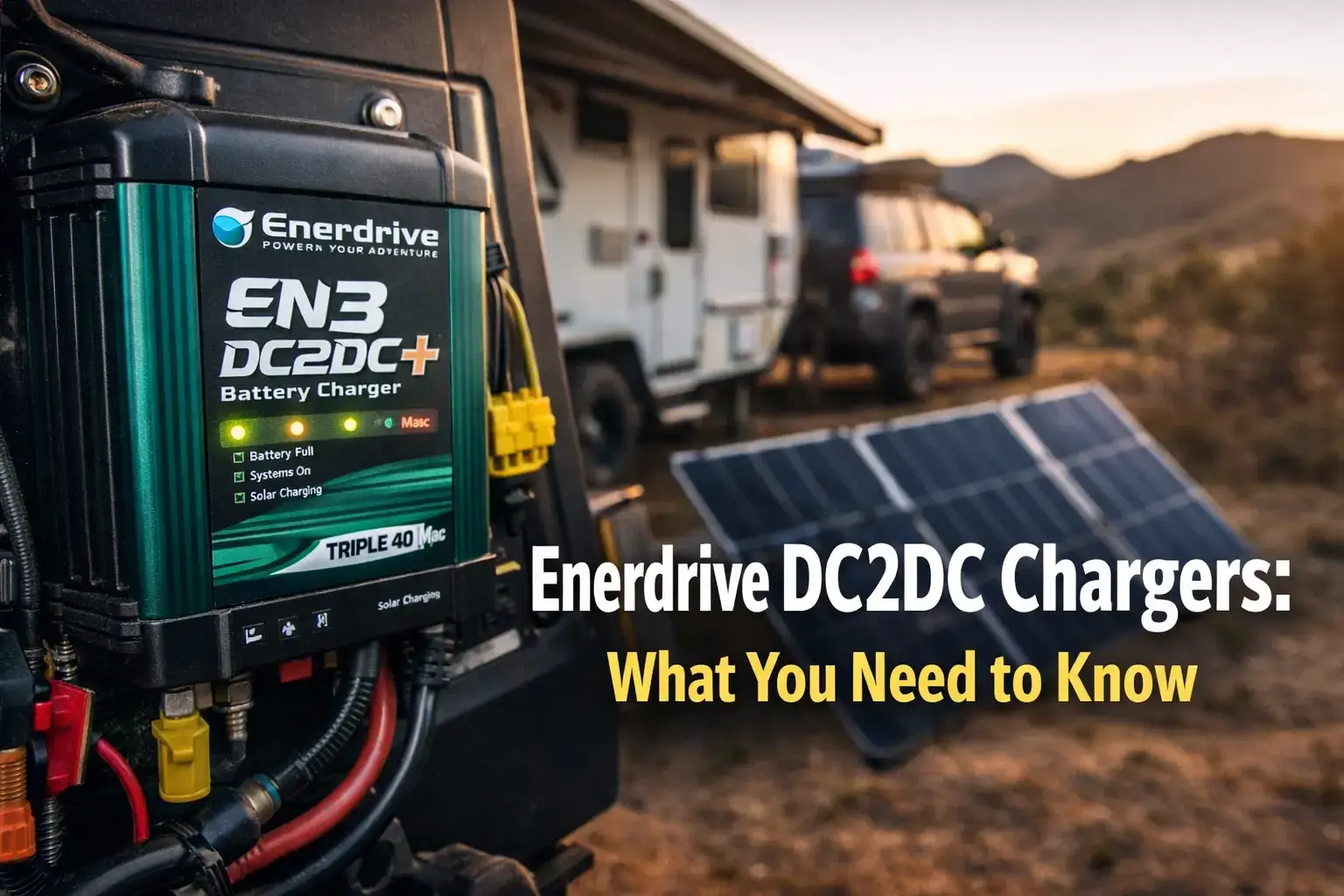
Enerdrive DC2DC chargers are purpose-built for Australian conditions. That means they’re designed to handle heat, vibration, dust and long-distance touring.
Rather than simply passing through alternator power, these chargers actively manage the charging process. They:
- Convert alternator voltage to the correct output
- Deliver controlled multi-stage charging
- Support lithium, AGM and lead-acid batteries
- Include built-in protection systems
Many models also feature integrated MPPT solar regulation, allowing you to combine alternator and solar charging in one unit. This simplifies wiring and saves valuable installation space.
Understanding Charging Capacity: 25A vs 40A
Choosing the right size DC2DC charger is one of the most important decisions.
Enerdrive units commonly come in 25-amp and 40-amp options. The right choice depends on your battery bank and how you travel.
If you have a larger lithium system (for example 200Ah or more) and you only drive short distances between camps, a 40A charger will recharge your battery significantly faster.
If your battery bank is smaller, or your alternator has limited output capacity, a 25A charger may be more appropriate.
It’s not about choosing the biggest model — it’s about matching the charger to your system.
Battery Compatibility and Lithium Charging
One of the biggest reasons travellers upgrade to a DC2DC charger is lithium compatibility.
Lithium batteries charge differently from traditional AGM or lead-acid batteries. They require:
- Stable voltage
- Proper absorption settings
- Controlled cut-off points
Enerdrive DC2DC chargers are designed to work with:
- LiFePO₄ lithium batteries
- AGM batteries
- Gel batteries
- Flooded lead-acid batteries
When set correctly, they protect lithium batteries from undercharging and overcharging – two major causes of premature battery failure.
Installation Considerations
A high-quality charger won’t perform properly if installed incorrectly.
Installation involves connecting the charger between your start battery and auxiliary battery, with proper fusing on both input and output sides. However, several factors significantly affect performance.
Cable size is critical. Undersized cables cause voltage drop, which reduces charging efficiency and can limit output. In longer cable runs – such as vehicles towing caravans – this becomes even more important.
Ventilation is another key factor. DC2DC chargers generate heat during operation. Mounting the unit in a tight, sealed compartment can cause thermal limiting, reducing performance.
Vehicles with smart alternators usually require an ignition trigger wire to ensure consistent activation. Without it, the charger may not engage reliably.
If you’re unsure about installation, professional fitting is always recommended.
How Enerdrive DC2DC Chargers Perform on the Road
In real-world touring, the charger operates automatically once the engine starts.
The charging process typically moves through:
- Bulk stage (rapid charging)
- Absorption stage (stabilising voltage)
- Float stage (maintenance level)
If solar panels are connected, the integrated MPPT regulator optimises solar input alongside alternator charging.
For travellers, this means arriving at camp with batteries properly charged and ready to power your setup overnight.
You won’t need to constantly monitor voltage or worry about whether your fridge will run through the night.
Smart Alternators and Why They Change Everything
Smart alternators reduce output voltage when the vehicle’s main battery is full or under light load. This is where many traditional dual battery systems fail.
A DC2DC charger compensates by boosting and regulating that voltage, ensuring the auxiliary battery receives proper charging.
For anyone driving a modern vehicle — especially newer 4WDs — a DC2DC charger is no longer just an upgrade. It’s a necessity.
Programming and Custom Settings
Enerdrive chargers allow configuration to suit different battery chemistries and system requirements.
Most users simply select the correct battery type during setup. However, advanced users can fine-tune voltage and absorption parameters to suit specific lithium battery brands.
Programming should always match the battery manufacturer’s recommendations. Incorrect settings can trigger battery management system (BMS) protection or reduce lifespan.
If you’re unsure, stick to manufacturer presets or consult a professional.
Common Issues and Troubleshooting
While Enerdrive DC2DC chargers are highly reliable, most issues relate to installation rather than the unit itself.
If the charger isn’t turning on, check:
- Input fuse condition
- Ground connections
- Ignition trigger wiring
- Alternator voltage
If charging seems slower than expected, consider cable size and ventilation. Batteries nearing full charge will also naturally reduce current draw.
Lithium systems that suddenly stop charging may be experiencing BMS protection due to temperature or voltage settings.
Understanding these basics can save time and unnecessary replacements.
Is an Enerdrive DC2DC Charger Worth It?
For most Australian travellers running lithium or touring in modern vehicles, the answer is yes.
A properly sized and installed DC2DC charger:
- Maximises battery lifespan
- Ensures full charge while driving
- Integrates solar effectively
- Protects your electrical investment
- Provides peace of mind in remote areas
When you’re hundreds of kilometres from the nearest powered site, reliable charging isn’t just convenient – it’s critical.
Final Thoughts
Enerdrive DC2DC chargers are a core component of modern dual battery and off-grid systems. They bridge the gap between increasingly complex vehicle alternators and the precise charging requirements of today’s batteries.
Understanding how they work, how to size them correctly and how to install them properly ensures your setup performs exactly as it should.
Whether you’re setting up your first touring rig or upgrading to a full lithium system, choosing the right DC2DC charger can make all the difference in reliability, efficiency and long-term battery health.
Need Help Choosing the Right Enerdrive DC2DC Charger?
Choosing the right Enerdrive DC2DC charger isn’t just about amperage — it needs to match your battery type, vehicle alternator and overall touring setup. An incorrectly sized or poorly installed charger can lead to slow charging, reduced battery life and ongoing electrical issues.
At Batteries Sunshine Coast, we help you select and install the right solution for your 4WD, caravan or camper so your system performs reliably in real Australian conditions. If you’re upgrading to lithium or unsure about your current setup, get in touch with our team today for expert advice and support.
Frequently Asked Questions
- What does an Enerdrive DC2DC charger actually do?
An Enerdrive DC2DC charger regulates and converts power from your vehicle’s alternator into the correct charging voltage for your auxiliary battery. It ensures safe, multi-stage charging – especially important for lithium batteries and vehicles with smart alternators.
- Do I need a DC2DC charger for a lithium battery?
Yes, in most modern vehicles. Lithium (LiFePO₄) batteries require stable and precise charging voltages. A DC2DC charger ensures your lithium battery charges properly and reaches full capacity while driving, protecting battery health and lifespan.
- Will an Enerdrive DC2DC charger work with a smart alternator?
Yes. Enerdrive DC2DC chargers are designed to work with smart alternators. They boost and regulate voltage when alternator output drops, ensuring your auxiliary battery continues charging correctly.
- Can Enerdrive DC2DC chargers charge AGM and lead-acid batteries?
Yes. Enerdrive DC2DC chargers support multiple battery chemistries, including lithium, AGM, gel and flooded lead-acid batteries. You simply select the correct battery profile during setup.
- Can I install an Enerdrive DC2DC charger myself?
If you have experience with 12V systems, you may be able to install it yourself. However, correct cable sizing, fuse protection, ignition wiring (for smart alternators), and ventilation are critical. Professional installation is recommended to ensure safe and reliable operation.
- Where should I mount an Enerdrive DC2DC charger?
It should be mounted in a dry, well-ventilated location away from direct heat sources. Avoid sealed compartments without airflow, as excessive heat can reduce charging performance.
- Are Enerdrive DC2DC chargers suitable for caravans and campers?
Absolutely. They are commonly installed in caravans, camper trailers and 4WD canopy builds to ensure auxiliary batteries charge properly while towing or driving.
- Why is my Enerdrive DC2DC charger not turning on?
If your Enerdrive DC2DC charger isn’t turning on, the issue is usually related to wiring or power supply. Common causes include a blown fuse, poor earth connection, low input voltage from the alternator, or a missing ignition trigger wire (especially in vehicles with smart alternators).
Start by checking all fuses, confirming the ignition signal is active, and testing input voltage at the charger terminals while the engine is running.