A 12-volt battery is at the heart of countless everyday applications — from starting your car in the morning to powering deep-cycle setups in caravans, boats, and 4WDs. When one runs flat, it can cause more than just inconvenience. Knowing how to charge a 12V battery safely and correctly is an essential skill for every driver, traveller, and DIYer.
In this guide, we’ll break down the basics of 12V batteries, the different charging options, step-by-step instructions, safety standards in Australia, and tips for getting the longest life from your battery.
Understanding 12V Batteries
A 12V battery is a rechargeable energy storage unit that provides 12 volts of direct current (DC). It’s the standard for vehicles, boats, motorcycles, and many off-grid applications.
Most 12V batteries are lead-acid (flooded, AGM, or gel), but lithium (LiFePO4) options are now common for caravans and solar setups. Each type has unique charging requirements — which is why selecting the right charger is so important.
Not all 12V batteries are the same, and the way you charge them may differ:
- Car starter batteries (lead-acid, calcium) – Built to deliver a quick burst of power to crank the engine.
- AGM & Gel batteries – Sealed, maintenance-free options often used in modern vehicles and caravans.
- Deep-cycle batteries – Designed to provide steady power over long periods; common in camping, marine, and solar systems.
- Lithium (LiFePO4) batteries – Lightweight and long-lasting, but require specific charging profiles.
- Motorcycle batteries – Smaller versions of starter batteries, but still require proper charging care.
The first step to charging safely is identifying your battery types and its requirements.
Choosing the Right Charger for a 12V Battery
Do you need a special charger for a 12V battery? In most cases, yes. Using the wrong charger can shorten the battery’s lifespan or even damage it.
Key factors to consider:
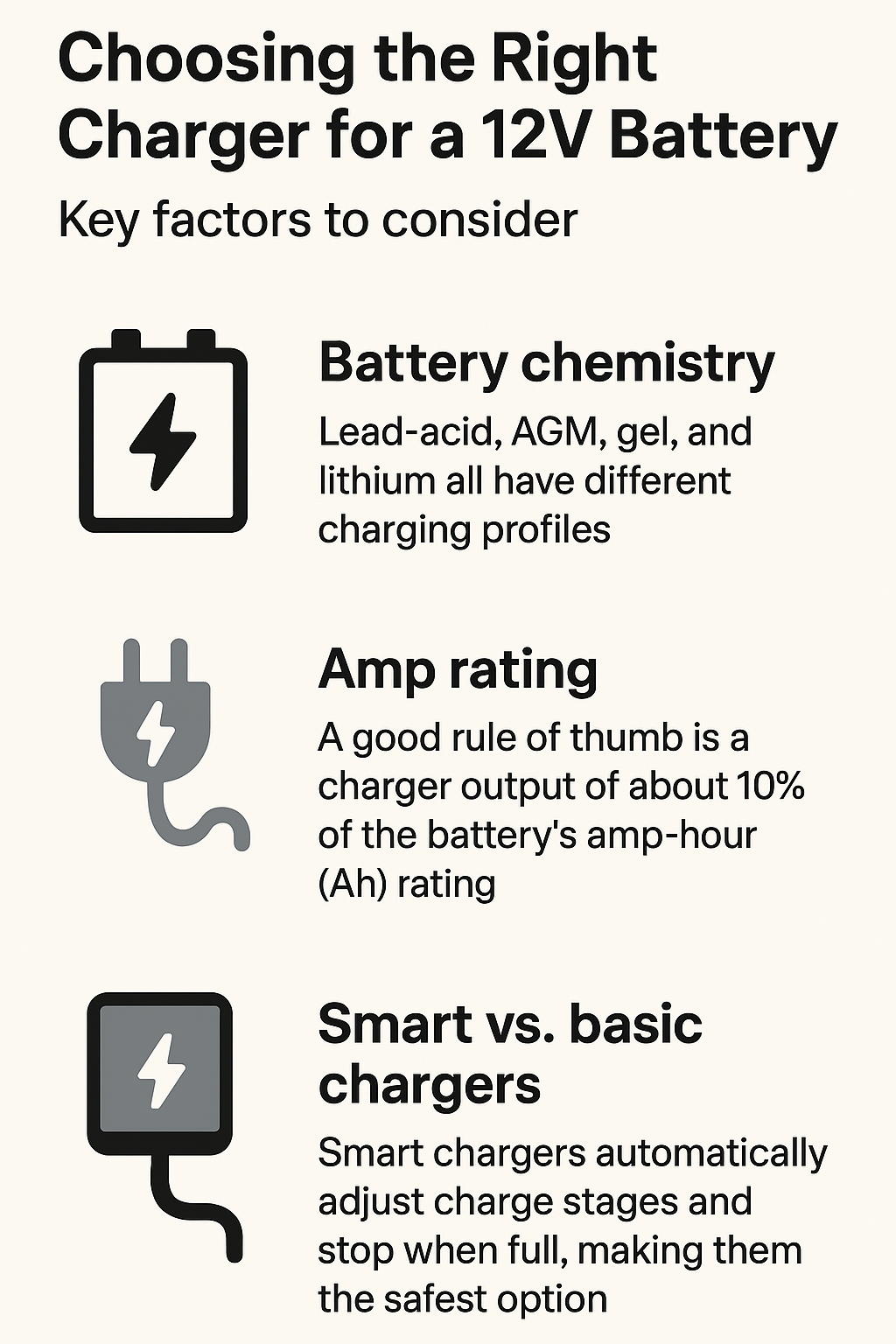
- Battery chemistry – Lead-acid, AGM, gel, and lithium all have different charging profiles.
- Amp rating – A good rule of thumb is a charger output of about 10% of the battery’s amp-hour (Ah) rating. For example, a 100Ah battery pairs well with a 10A charger.
- Smart vs. basic chargers – Smart chargers automatically adjust charge stages and stop when full, making them the safest option.
Victron Energy Chargers are highly recommended in Australia. Models like the Victron Blue Smart IP65 or Victron Blue Smart IP22 are reliable, work with multiple chemistries (including lithium), and meet Australian safety standards.
Step-by-Step: How to Charge a 12V Battery
Step 1: Prepare the Space and Battery
Place the battery in a clean, well-ventilated area, away from direct sunlight and moisture.
If charging while it’s still fitted to your vehicle or boat, make sure the ignition and all electrical accessories are off.
Step 2: Check the Battery’s Health First
Before hooking up the charger, inspect the case and terminals.
- If you notice swelling, cracks, or leaks, don’t attempt to charge — replace the battery instead.
- Light corrosion on the posts can be cleaned with a wire brush and a baking soda solution.
Step 3: Connect the Charger Safely
With the charger switched off:
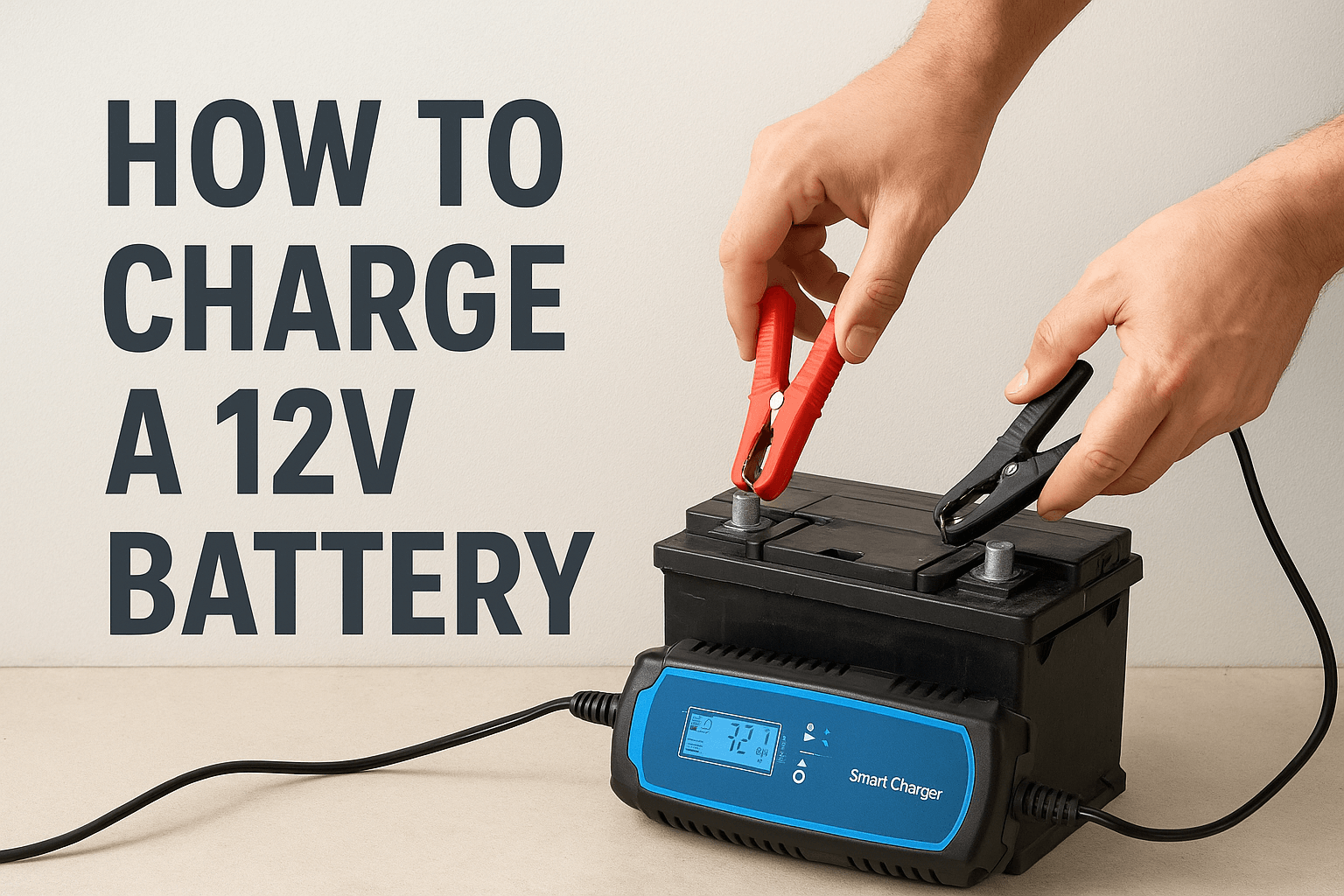
- Attach the red lead to the positive (+) terminal.
- Attach the black lead to the negative (–) terminal, or to a solid, unpainted part of the chassis if charging in-vehicle.
Step 4: Select the Correct Settings
Set your charger to match your battery type (standard lead-acid, AGM, gel, or lithium). Choose an amp rate suitable for your battery’s capacity. A safe guideline is roughly 10% of the battery’s Ah rating (e.g. 10A for a 100Ah battery).
Step 5: Power On and Begin Charging
Plug the charger into mains power and turn it on. Modern smart chargers will automatically move through charging stages (bulk, absorption, float), while older manual chargers may need closer monitoring.
Step 6: Observe the Charging Process
Keep an eye on the charger’s display or indicator lights.
- A 12V lead-acid battery is considered charged at around 12.6–12.8 volts.
- Lithium batteries usually sit between 13.2–13.4 volts when full.
Some gentle warmth is normal, but overheating or hissing noises signal a problem — stop charging immediately if this happens.
Step 7: Switch Off and Disconnect in Reverse
- Once charging is complete, switch off the charger before removing the clamps. Detach the black (–) lead first, then the red (+).
- If the battery was removed for charging, reinstall it securely in its tray and reconnect vehicle cables in the same order.
Step 8: Confirm the Battery is Ready
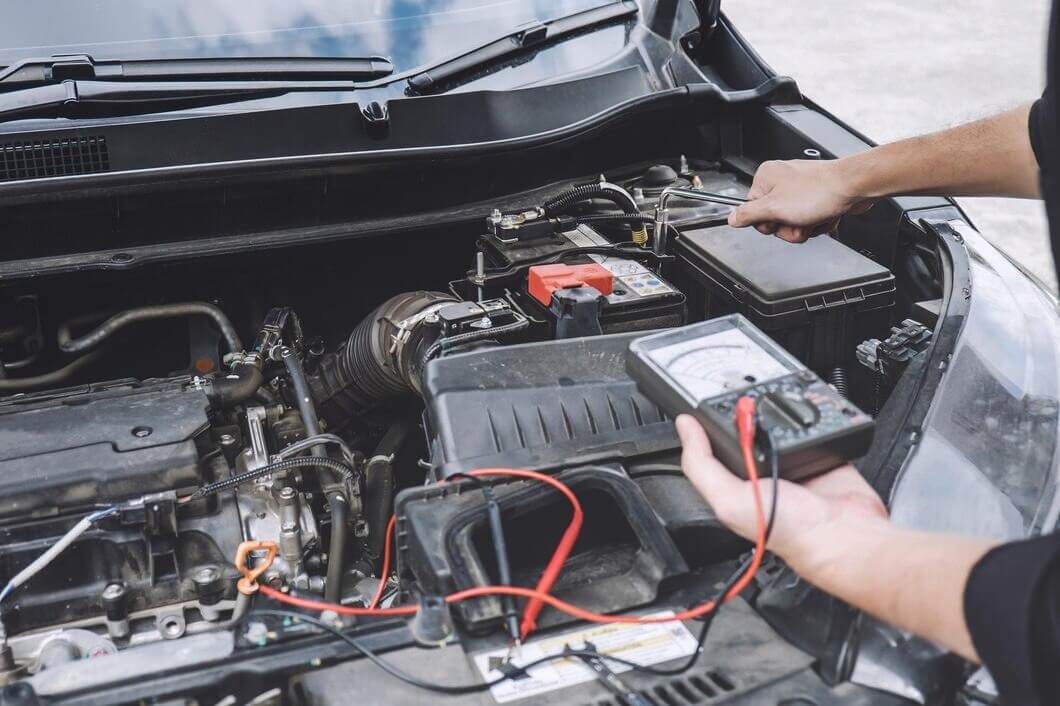
Check the resting voltage with a multimeter after 30 minutes — it should hold steady in the healthy range.
Finally, test it under load (starting your vehicle or powering equipment). If it doesn’t perform, the battery may no longer be serviceable.
How Much Time Does It Take to Charge a 12V Battery?
It depends on the charger size and battery capacity:
- Battery capacity – Larger Ah ratings take longer.
- Discharge depth – Mildly flat batteries charge quickly, while deeply discharged ones need many hours.
- Charger output – A 2A trickle charger may take 24 hours or more, while a 10A smart charger could do the same job in 8–10 hours.
- Battery condition – Old or sulfated batteries charge much slower, if at all.
Alternative Charging Options
Sometimes you don’t have access to a mains charger. Other ways to recharge a 12V battery include:
- Vehicle alternator – Driving or running the engine for 45–60 minutes can recharge a car battery, but this won’t fully restore a deeply discharged one.
- Solar panels – A 100–150W solar panel with a quality regulator is typically suitable for recharging a 12V battery, especially deep-cycle ones used in camping setups.
- Jump packs or jump leads – Provide instant power to start the engine, but the alternator still needs to top up the battery afterwards.
What Size Solar Panel Do I Need to Charge a 12V Battery?
A 12V solar panel (18–22V output) with a solar charge controller is required. The controller regulates voltage and current, preventing overcharging and protecting the battery. Panel size depends on your battery capacity and how often you use it:
- Car starter battery (50Ah): ~100W panel for maintenance.
- Deep-cycle (100Ah): 200–300W panel for daily cycling.
- Larger setups (200Ah+): 400–600W solar array recommended.
Always pair with an MPPT charge controller for efficient charging.
How to Know When Your 12V Battery is Fully Charged
Signs of a full charge include:
- Voltage stabilises at 12.6–12.8V (lead-acid) or 13.2–13.4V (lithium).
- A smart charger switches to float or maintenance mode.
- Minimal current draw at the end of charging.
Using a multimeter or a battery tester gives the most accurate confirmation.
Choosing the Right 12V Battery Charger
Using the correct charger is essential for both safety and battery life. A mismatched charger can shorten a battery’s lifespan or even cause permanent damage. Here’s how to make the right choice:
1. Match the Charger to Your Battery Type
Different chemistries require different charging profiles:
- Lead-acid & AGM – Standard 12V chargers usually support these.
- Gel batteries – Need lower voltages to prevent overcharging.
- Lithium (LiFePO₄) – Require dedicated lithium-compatible chargers.
Make sure your charger has the right mode for your battery type.
2. Choose the Correct Charging Current
A good rule of thumb is to select a charger with an amp rating between C/10 and C/5 (where C = battery capacity in amp-hours).
- Example: For a 100Ah battery, choose a charger rated between 10A and 20A. Charging too slowly can waste time, while too high a current may cause overheating or stress.
3. Smart vs. Basic Chargers
- Smart chargers automatically adjust voltage and current across charging stages (bulk, absorption, float) and switch to maintenance mode when full. These are the safest and most convenient options.
- Basic chargers provide a fixed output and require manual monitoring to avoid overcharging.
For most users, a smart charger is worth the investment.
4. Safety Standards and Quality
In Australia, chargers should comply with AS/NZS 60335 for household electrical safety. Always choose trusted brands that meet these requirements.
5. Recommended Chargers
For reliable performance, Victron battery chargers are highly regarded. Models like the Victron Blue Smart IP65 and Victron Blue Smart IP22 work with multiple chemistries (including lithium), feature Bluetooth monitoring, and meet Australian safety standards.
Safety and Australian Standards
When charging in Australia, follow these practices:
- Only use chargers that comply with AS/NZS 60335.2.29.
- Charge in well-ventilated areas to prevent hydrogen build-up.
- Keep a baking soda solution handy to neutralise acid spills.
- Dispose of old batteries responsibly — most councils, service centres, and battery retailers accept them for recycling.
Troubleshooting: Recharge or Replace?
Sometimes charging isn’t enough. Consider replacing the battery if:
- It’s more than 3– years old.
- It fails a load test at a service centre.
- It goes flat quickly even after a full recharge.
- The case is swollen, cracked, or leaking.
Maintenance Tips to Avoid a Flat Battery
- Turn off lights and accessories when parked.
- Drive longer trips occasionally to allow alternator charging.
- For stored vehicles, use a battery maintainer or disconnect the battery.
- Test battery health annually, especially before long trips.
Final Thoughts
Knowing how to charge a 12V battery is more than a convenience — it’s an essential skill for car owners, 4WD adventurers, and anyone using deep-cycle or lithium systems. Whether you’re looking to recharge a car battery, maintain a caravan setup, or keep a boat powered, the process is simple with the right charger, proper preparation, and safe handling.
Investing in a quality smart charger, like those from Victron Energy, ensures reliable performance and longer battery life. Combine that with Australian-compliant safety practices, and you’ll never be caught out by a flat 12V battery again.
FAQs
- How to charge a 12V battery without a charger?
You can use a solar panel with a charge controller, or connect jumper leads to another fully charged 12V battery (jump-starting). However, a proper charger is always the safest and most reliable method. - Can a dead 12 volt battery be recharged?
If the battery is only deeply discharged, a smart charger may recover it. But if it’s completely dead (sulphated or damaged), it usually can’t be revived and should be replaced. If the battery is below 5-6v a charger or jump pack wont work, best to call a professional on how to re charge your flat battery. - How long does it take to charge a 12 volt battery with a 2 amp charger?
A small 2A charger can take 24–48 hours to fully charge a flat car battery, depending on its size (Ah rating). - How to manually charge a 12V battery?
Connect a suitable 12V charger: positive clamp to positive terminal, negative to negative or chassis ground, then power on the charger. Always follow the charger’s instructions. - Is it OK to leave a car battery charger on overnight?
If it’s a modern smart charger, yes — it automatically switches to maintenance mode when full. With older/manual chargers, no — they can overcharge and damage the battery.