
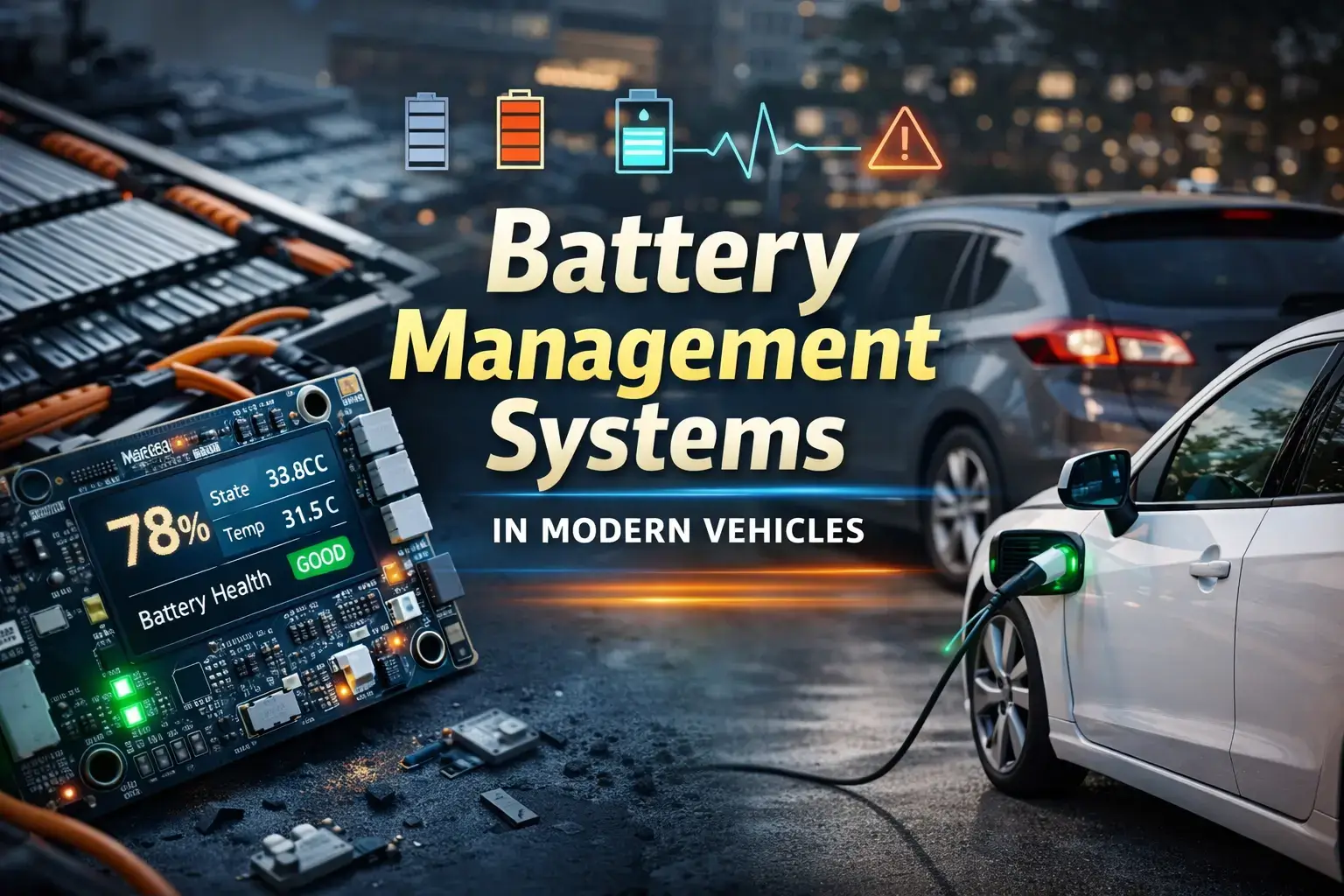
Modern vehicles are undergoing a profound transformation. With the rapid adoption of electric and hybrid technologies, the role of batteries has become more critical than ever. Whether it’s a fully electric vehicle (EV), a hybrid, or even a modern internal combustion engine (ICE) vehicle with advanced electronics, battery performance directly influences efficiency, safety, and reliability, whether its high-voltage systems in EVs or traditional car batteries used in everyday vehicles.
At the heart of this performance lies the Battery Management System (BMS)—an intelligent electronic system designed to monitor, protect, and optimise battery operation. While often overlooked by everyday drivers, the BMS is one of the most important components in any modern vehicle.
This guide explores what a Battery Management System is, how it works, its key components, and why it plays such a vital role in today’s vehicles.
What is a Battery Management System?
A Battery Management System (BMS) is an electronic control system that manages rechargeable batteries. Its primary purpose is to ensure that the battery operates safely, efficiently, and within its designed limits.
In modern vehicles, particularly EVs, the battery pack consists of hundreds or even thousands of individual cells. Without proper management, these cells can become unbalanced, overcharged, or overheated—leading to reduced performance, shortened lifespan, or even safety risks.
The BMS acts as the “brain” of the battery, constantly monitoring parameters such as voltage, current, temperature, and state of charge. It then uses this data to make real-time decisions that protect the battery and optimise its performance.
Why Battery Management Systems Are Essential
Battery technology has advanced rapidly, but it still has inherent limitations. Lithium-ion batteries, which are widely used in EVs, are sensitive to overcharging, deep discharging, and temperature extremes.
Without a BMS, these issues could result in:
- Reduced battery lifespan
- Loss of efficiency
- Inaccurate range estimation
- Increased safety risks, including overheating
A BMS addresses all these concerns by maintaining optimal operating conditions. This is especially important in Australia, where extreme temperatures and long driving distances place additional stress on vehicle batteries.
Core Functions of a Battery Management System
A modern BMS performs several interconnected functions. Rather than acting as a single-purpose tool, it operates as a complex system responsible for multiple layers of control and protection.
Monitoring State of Charge (SoC)
One of the most visible roles of a BMS is tracking the battery’s State of Charge. This is the equivalent of a fuel gauge in a petrol vehicle. However, unlike a simple gauge, SoC calculations are highly sophisticated.
The BMS uses algorithms that consider voltage, current, temperature, and historical usage patterns to estimate how much energy remains. This information is crucial for drivers, as it determines range and helps avoid unexpected depletion.
Monitoring State of Health (SoH)
Beyond current charge levels, the BMS also evaluates the overall condition of the battery over time. This is known as the State of Health.
As batteries age, their ability to hold and deliver energy declines. The BMS tracks this degradation and provides insights into long-term performance. This allows manufacturers and drivers to anticipate maintenance or replacement needs.
Temperature Management
Temperature is one of the most critical factors affecting battery performance and safety. Batteries operate best within a specific temperature range.
In Australia’s hot climate, overheating can accelerate battery degradation or trigger safety issues. The BMS works alongside cooling and heating systems to regulate temperature, ensuring the battery remains within safe limits regardless of external conditions.
Cell Balancing
Battery packs are made up of multiple cells, and each cell can behave slightly differently over time. If some cells charge faster or discharge more quickly than others, it can reduce overall efficiency and lifespan.
The BMS performs cell balancing to ensure that all cells operate evenly. This process maximises the usable capacity of the battery and prevents weaker cells from limiting performance.
Safety Protection
Safety is arguably the most important function of a BMS. It constantly monitors for abnormal conditions such as:
- Overcharging
- Deep discharging
- Short circuits
- Excessive current flow
If any of these conditions are detected, the BMS can take immediate action, such as disconnecting the battery or limiting power output. This helps prevent dangerous scenarios like thermal runaway, where a battery overheats uncontrollably.
How a BMS Enhances Vehicle Performance
While safety and protection are critical, the BMS also plays a major role in improving overall vehicle performance.
Energy Efficiency
A well-designed BMS optimises how energy is used and distributed. By managing power flow intelligently, it reduces waste and ensures that more of the stored energy is available for driving.
This directly translates into improved range, which is one of the most important considerations for EV owners.
Charging Optimisation
Charging is not as simple as plugging in and filling up. Fast charging, in particular, can place stress on battery cells if not managed properly.
The BMS controls charging rates, adjusts current flow, and ensures that the battery is charged safely and efficiently. It can also adapt charging behaviour based on battery condition and environmental factors.
Consistent Power Delivery
Drivers expect smooth and reliable performance, whether accelerating on a highway or navigating city traffic. The BMS ensures consistent power output by balancing energy distribution and maintaining stable operating conditions.
BMS in EV vs Hybrid Vehicles
Although both electric and hybrid vehicles use BMS technology, their requirements differ significantly.
Electric Vehicles (EVs)
In fully electric vehicles, the battery is the sole source of power. This means the BMS has a central role in managing energy for propulsion, regenerative braking, and auxiliary systems.
EV BMS units are typically more complex, as they must handle larger battery capacities and higher energy demands.
Hybrid Vehicles
Hybrid vehicles combine an internal combustion engine with a smaller battery pack. The BMS in a hybrid must manage the interaction between these two power sources.
It determines when to use electric power, when to rely on the engine, and when to recharge the battery. This balancing act is essential for achieving optimal fuel efficiency.
Key Differences
The primary difference lies in scale and usage patterns. EVs require long-duration energy management, while hybrids focus on frequent charge and discharge cycles. Despite these differences, the underlying principles of monitoring, protection, and optimisation remain the same.
Benefits of Battery Management Systems for Drivers
For everyday drivers, the advantages of a BMS are both practical and financial.
A well-functioning BMS significantly extends battery lifespan, reducing the need for frequent replacements and lowering long-term costs. Given that battery replacement is one of the most expensive aspects of EV ownership, this is a major benefit.
Safety is another key advantage. The BMS reduces the risk of battery-related incidents, providing peace of mind for drivers and passengers alike.
Additionally, accurate range estimation helps reduce “range anxiety,” allowing drivers to plan journeys with confidence. Improved efficiency also means lower energy costs over time.
The Role of BMS in Australian Driving Conditions
Australia presents unique challenges for modern vehicles. High temperatures, long travel distances, and varying terrain all impact battery performance.
The BMS is crucial in addressing these challenges. Its temperature regulation capabilities help protect batteries from heat-related damage, while its energy management functions support long-distance travel.
For Australian drivers, this means greater reliability and confidence, even in demanding conditions.
Common BMS Issues and Maintenance Considerations
Although BMS technology is highly reliable, it is not immune to issues. Problems can arise from software glitches, sensor failures, or communication errors within the system.
When a BMS fault occurs, it may trigger warning lights or affect vehicle performance. Reduced range, slower charging, or unexpected shutdowns can all be signs of an issue.
To minimise risks, regular software updates are essential. Manufacturers often release updates that improve BMS performance and fix potential bugs.
It is also advisable to avoid exposing the vehicle to extreme conditions for extended periods. Parking in shaded areas or garages can help reduce thermal stress.
If any warning signs appear, professional diagnostics should be sought promptly. Early intervention can prevent more serious problems.
Conclusion
Battery Management Systems are a cornerstone of modern vehicle technology, ensuring battery packs operate safely, efficiently, and reliably. From monitoring charge levels to regulating temperature, the BMS plays a vital role in enhancing performance and extending battery life across both EV systems and everyday car batteries.
As vehicles continue to electrify, the importance of BMS will only grow. For drivers, understanding this technology builds confidence in performance, safety, and reliability—making it the silent system powering the future of transport.
Frequently Asked Questions (FAQs)
1. What does a Battery Management System (BMS) do in a vehicle?
A Battery Management System monitors, controls, and protects a vehicle’s battery pack. It ensures the battery operates safely by regulating charge levels, temperature, and power flow while optimising overall performance and lifespan.
2. How does a BMS improve battery lifespan?
A BMS extends battery life by preventing overcharging, avoiding deep discharge, maintaining optimal temperature, and ensuring balanced performance across all battery cells.
3. Can a BMS prevent battery overheating?
Yes, a BMS continuously monitors battery temperature and activates cooling or heating systems when needed. This is especially important in hot climates like Australia.
4. How does a BMS affect vehicle range?
A BMS improves range by optimising energy usage and providing accurate charge estimates. It ensures the battery delivers consistent power while minimising energy loss.
5. How does a BMS help with fast charging?
A BMS controls charging speed and current flow during fast charging to prevent stress on the battery, ensuring safe and efficient charging.
Need Help with Your Vehicle Battery?
If you’re experiencing battery issues, reduced performance, or charging problems, it’s best to act early. At Batteries Sunshine Coast, we provide fast, reliable battery testing, replacement, and expert advice to keep your vehicle running at its best.
Call 1800 248 028 or book your service today.